

Having your Bahrain visa application rejected can be frustrating, especially when you have travel plans already in place. Understanding the most common reasons for rejection – and knowing exactly what steps to take next – can save you time, money, and stress. This comprehensive guide covers every reason your Bahrain eVisa might be denied, how to fix each issue, and the reapplication process.
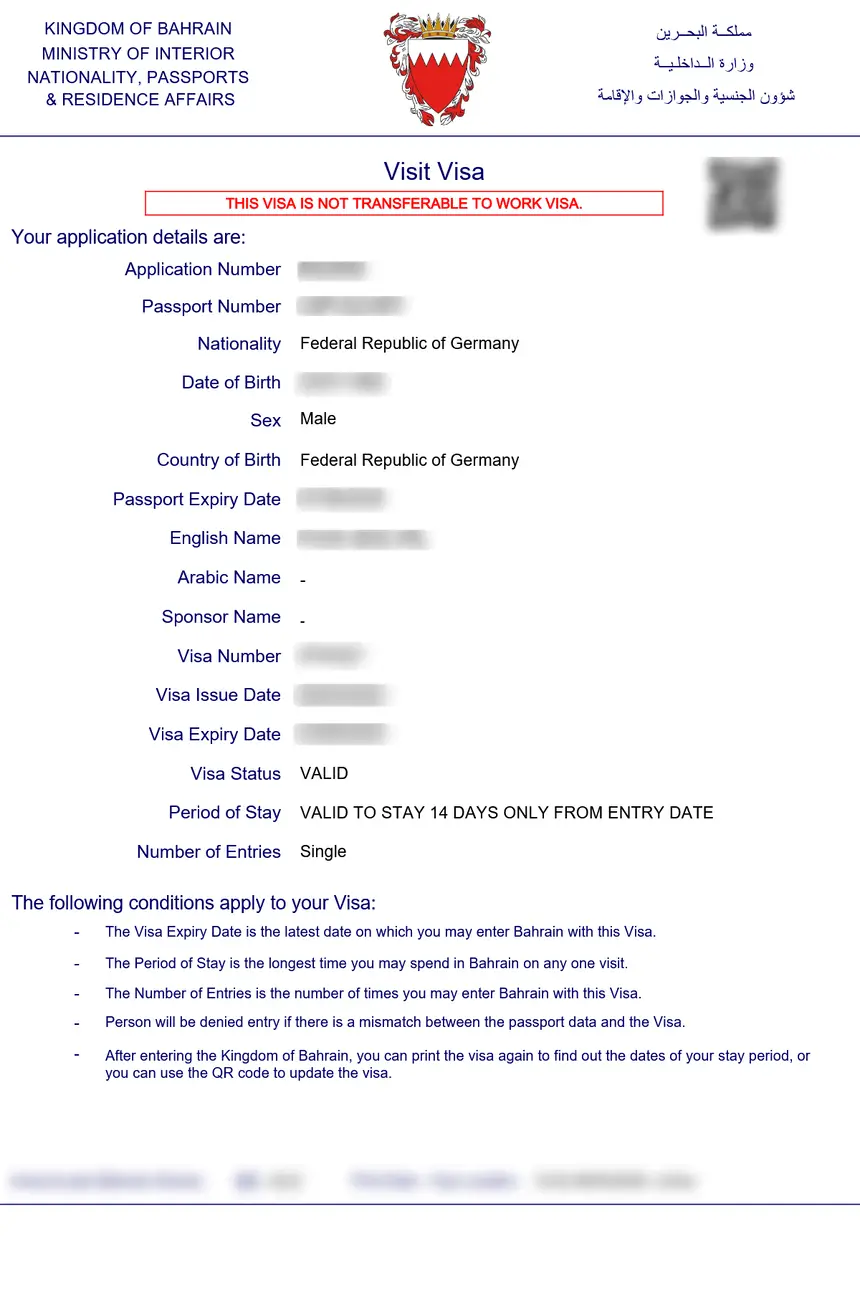
Why Is My Bahrain Visa Rejected?
The Bahrain Nationality, Passports and Residence Affairs (NPRA) department reviews every visa application against a set of eligibility criteria. When an application fails to meet one or more of these criteria, it is rejected. The most frequent triggers include incomplete documentation, passport validity issues, prior immigration violations, and security-related concerns.
Bahrain does not always provide a detailed rejection reason in the official notification. In many cases, applicants receive a generic “application denied” status. However, by reviewing the common rejection causes below, you can usually identify what went wrong and correct it before reapplying.
8 Common Reasons for Bahrain Visa Rejection
1. Incomplete or Incorrect Application Form
The single most common reason for Bahrain visa rejection is errors on the application form. This includes misspelled names, wrong passport numbers, incorrect dates of birth, or mismatched travel dates. Even a single digit out of place can trigger a rejection.
How to avoid it: Double-check every field against your passport before submitting. Pay special attention to your full name (exactly as it appears on the passport), passport number, date of birth, and nationality.
2. Passport Validity Issues
Bahrain requires your passport to be valid for at least six months beyond your intended date of entry. If your passport expires within six months of your arrival date, your application will be rejected.
How to avoid it: Check your passport expiry date before applying. If it expires within six months, renew your passport first. Learn more about all Bahrain visa requirements before starting your application.
3. Insufficient Supporting Documents
Missing or inadequate supporting documents are a leading cause of rejection. Depending on your visa type, you may need to provide hotel bookings, return flight tickets, proof of sufficient funds, an invitation letter, or a sponsor letter.
How to avoid it: Review the complete document checklist for your specific visa type. Our guide on Bahrain visa requirements provides a full checklist by nationality and visa category.
4. Previous Immigration Violations
If you have overstayed a previous visa in Bahrain, worked illegally, or violated any immigration law in the Gulf Cooperation Council (GCC) countries, your new application is likely to be rejected. Bahrain shares immigration data with other GCC nations (Saudi Arabia, UAE, Kuwait, Qatar, and Oman).
How to avoid it: Clear any outstanding fines or immigration violations before applying. If you have a prior overstay, include a cover letter explaining the circumstances and proof that the matter was resolved.
5. Security or Background Concerns
Applications may be flagged during security screening if the applicant has a criminal record, is on an international watchlist, or has connections to sanctioned entities. This type of rejection is rarely overturned through the standard reapplication process.
How to avoid it: If you have a criminal record, consider consulting an immigration lawyer before applying. Some minor offences may not be disqualifying, but serious convictions typically result in permanent ineligibility.
6. Applying for the Wrong Visa Type
Selecting the wrong visa category can lead to rejection. For example, applying for a tourist visa when you intend to work, or applying for a short-term visa when your stay exceeds the permitted duration.
How to avoid it: Understand the different Bahrain visa types before applying. If you are visiting for business meetings, a tourist eVisa is usually sufficient, but actual employment requires a work visa sponsored by a Bahraini employer.
7. Financial Insufficiency
Bahrain immigration authorities may reject applications if the applicant cannot demonstrate sufficient financial means to cover their stay. This is more common for longer visa durations or when bank statements are not provided.
How to avoid it: Prepare recent bank statements (typically the last three months) showing adequate funds. The general guideline is at least BHD 300 (approximately USD 800) per month of intended stay, though there is no officially published minimum.
8. Duplicate or Overlapping Applications
Submitting multiple applications simultaneously or applying while a previous application is still being processed can cause both applications to be rejected.
How to avoid it: Check your Bahrain visa status before submitting a new application. If you already have an active application, wait for it to be processed before reapplying.
Can I Appeal a Bahrain Visa Rejection?
Bahrain does not offer a formal appeal process for eVisa rejections. Unlike some countries where you can submit an appeal to an immigration tribunal, Bahrain’s system does not provide this option for electronic visa applications.
However, you have two practical options:
-
Reapply with corrected information – If the rejection was due to documentation or application errors, you can submit a new application with the correct information. There is no mandatory waiting period between applications.
-
Contact the NPRA directly – For cases where you believe the rejection was an error, you can reach out to the Nationality, Passports and Residence Affairs department:
- Website: www.npra.gov.bh
- Email: [email protected]
-
Phone: +973 1739 9777
-
Apply through a Bahraini sponsor – If you have a contact in Bahrain (a company, hotel, or resident), they can apply for a visa on your behalf through the Labour Market Regulatory Authority (LMRA) or the NPRA, which may have better success rates.
How to Reapply After Bahrain Visa Rejection
Reapplying after a rejection follows the same process as a first-time application, but with extra attention to the issues that caused the original rejection.
Step 1: Identify the Rejection Reason
Review the rejection notification carefully. While it may not specify the exact reason, cross-reference your application against the common rejection causes listed above. Compare your documents against the requirements for your nationality.
Step 2: Correct the Issue
- Document errors: Gather the correct documents and ensure they meet the specifications (format, language, validity).
- Passport issues: Renew your passport if it has less than six months validity.
- Financial proof: Obtain updated bank statements or a sponsor letter.
- Visa type mismatch: Apply for the correct visa category.
Step 3: Submit a Fresh Application
Go to the official Bahrain eVisa portal at www.evisa.gov.bh and submit a new application. Use the same login credentials if you have an existing account. Ensure every field matches your supporting documents exactly.
Step 4: Track Your Application
After submitting, monitor your application status through the Bahrain visa status checker. Processing typically takes 3-5 business days for eVisa applications.
How Long Should I Wait Before Reapplying?
There is no officially mandated waiting period after a Bahrain visa rejection. You can reapply immediately once you have corrected the issue that caused the rejection. However, consider the following:
- If rejected due to documentation: Reapply as soon as you have the correct documents.
- If rejected due to security screening: Wait at least 30 days and consider consulting an immigration lawyer.
- If rejected due to a prior overstay: Ensure all fines are paid and the ban period (if any) has elapsed before reapplying.
- Multiple rejections in a short period: If your application has been rejected 2-3 times, wait at least 90 days and consider changing your approach (e.g., applying through a sponsor or using a different visa type).
Bahrain Visa Rejection Rate by Nationality
Bahrain’s overall visa approval rate is relatively high compared to other Gulf states. However, rejection rates vary by nationality. Applicants from countries with higher rates of immigration violations or security concerns may face more scrutiny.
Nationalities that commonly receive Bahrain eVisas without issues include:
- United States, United Kingdom, Canada, Australia, and EU member states
- Japan, South Korea, and Singapore
- GCC nationals (Saudi Arabia, UAE, Kuwait, Qatar, Oman)
Nationalities that may face additional screening include applicants from certain South Asian, African, and Middle Eastern countries. This does not mean automatic rejection – it means the processing time may be longer and additional documents may be requested.
For nationality-specific guidance, see our guides for:
– Bahrain Visa for Indians
– Bahrain Visa for Pakistanis
– Bahrain Visa for US Citizens
What Happens to My Visa Fee If My Application Is Rejected?
Bahrain eVisa application fees are non-refundable, regardless of the outcome. This applies to all visa types, including tourist, business, and transit eVisas. The fee covers the administrative cost of processing your application, not the visa itself.
To avoid losing your fee, ensure your application is complete and accurate before submitting. Review the Bahrain visa fee structure to understand the costs involved for your specific visa type.
Frequently Asked Questions
Can I apply for a Bahrain visa on arrival if my eVisa is rejected?
Yes, in some cases. If you are from a nationality eligible for Bahrain visa on arrival, you may still be able to obtain a visa at the airport. However, if your rejection was due to security concerns or a prior ban, you will likely be denied at the border as well.
Does a Bahrain visa rejection affect future applications?
A single rejection due to documentation errors does not typically affect future applications. However, multiple rejections or rejections due to security concerns or immigration violations will be on record and may complicate future applications.
Can I get a Bahrain visa through a travel agency after rejection?
Yes. Licensed travel agencies and visa processing services in Bahrain can submit applications on your behalf. They may have experience navigating common rejection reasons and can help ensure your application is complete. However, no agency can guarantee approval.
Is there a difference between eVisa rejection and visa on arrival rejection?
The rejection criteria are the same regardless of how you apply. However, a visa on arrival rejection means you have already traveled to Bahrain and may face deportation, which is far more costly and disruptive than an eVisa rejection before travel.
Can a rejected applicant be blacklisted from Bahrain?
In extreme cases, yes. If an applicant is found to have submitted fraudulent documents, misrepresented their identity, or has a serious criminal record, they may be permanently barred from entering Bahrain. This is rare and typically only applies to serious violations.
Tips to Avoid Bahrain Visa Rejection
- Apply early – Submit your application at least two weeks before your travel date to allow time for corrections if needed.
- Use official channels – Apply through the official eVisa portal or authorized visa processing centers.
- Match documents exactly – Ensure your name, passport number, and dates match across all documents.
- Provide complete documentation – Include all required documents even if they seem optional.
- Check passport validity – Ensure at least six months validity from your entry date.
- Demonstrate ties to home country – Having a return ticket, employment letter, or property ownership can strengthen your application.
- Be honest – Never provide false information or documents. Fraudulent applications result in bans.
Related Guides
- Bahrain eVisa: Complete Guide – Everything you need to know about the electronic visa
- Bahrain Visa Online Application – Step-by-step application walkthrough
- Bahrain Visa Processing Time – How long your application takes
- Bahrain Visa Extension – How to extend your stay in Bahrain
- Bahrain Visa Types – All visa categories explained
- Check Bahrain Visa Status – Track your application online
Last updated: July 2026. Information based on current NPRA guidelines and the Bahrain eVisa system.